Diktator records all your calls, automatically, by default. Every call is written up and filed on your Mac. Use it to dictate your emails too.
Don't type. Dictate.
Free beta · Apple silicon, macOS 14.2 or later
Dictation, in the other sense
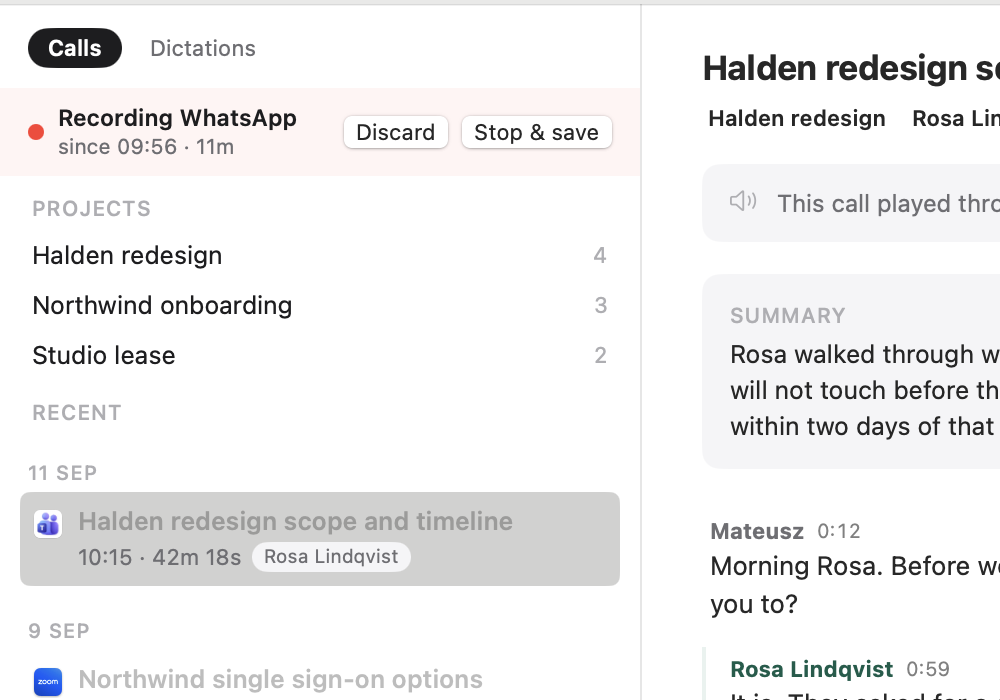
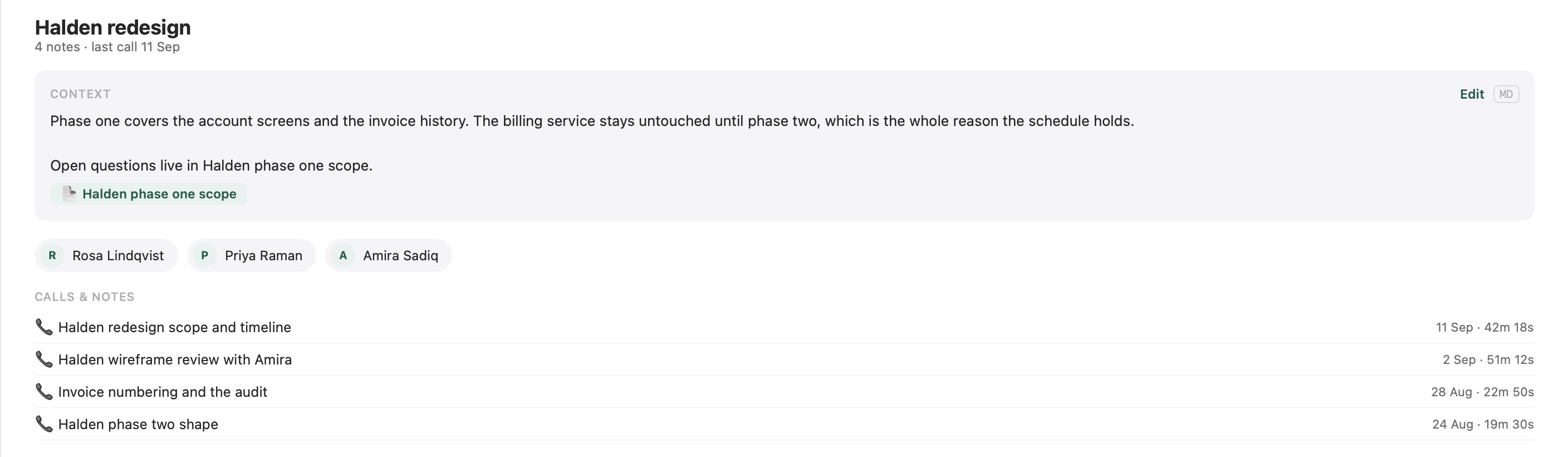
A call starts. Diktator starts listening on its own. When the call ends it saves the transcript, writes the summary, and updates the pages of the person and the project. Your local model gets the whole history as context.
For the record
Zoom · Meet · Teams · FaceTime · WhatsApp · any tab
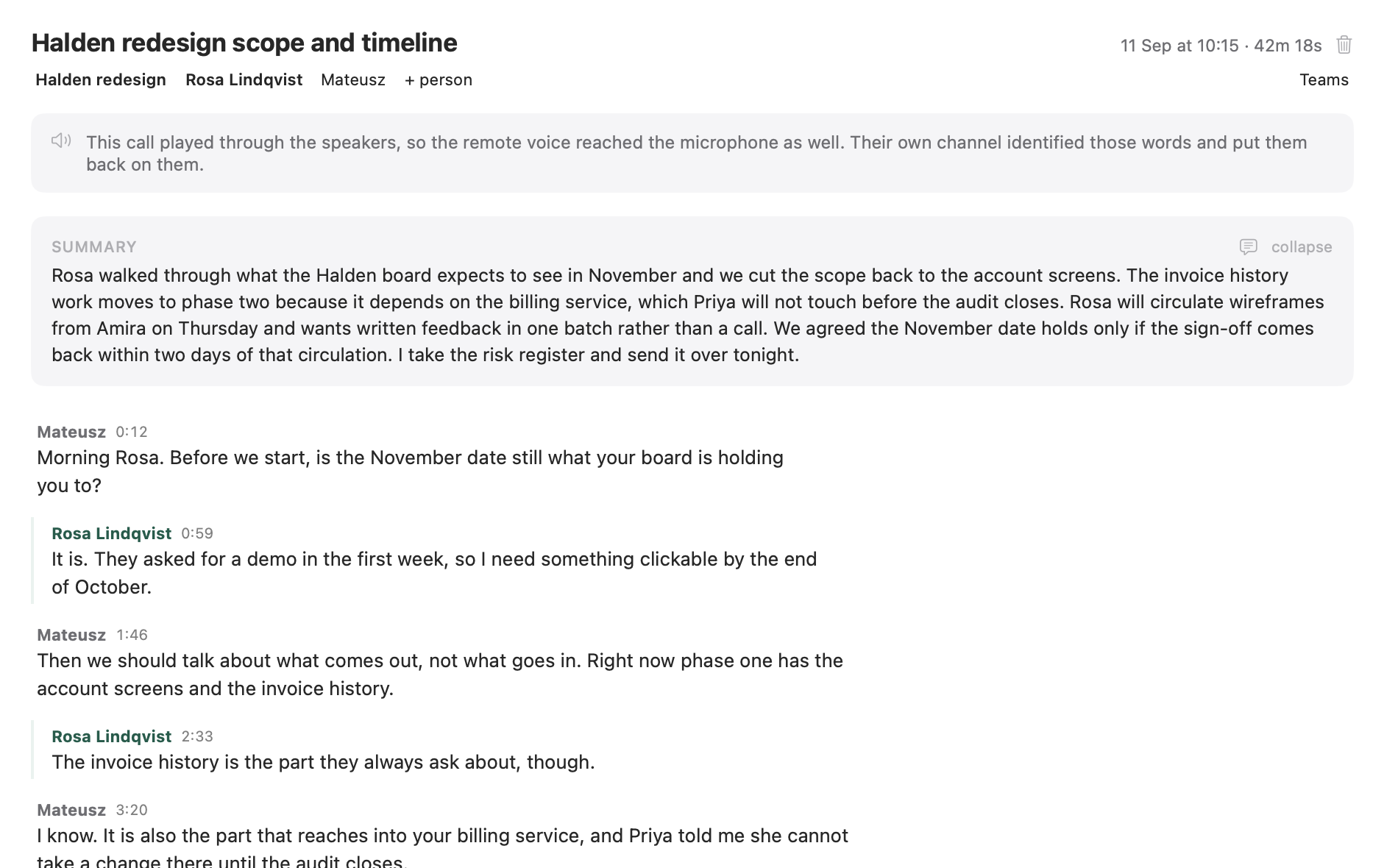
Your voice and theirs, kept apart. A summary on top. On speaker calls a few of their words can land under your name.

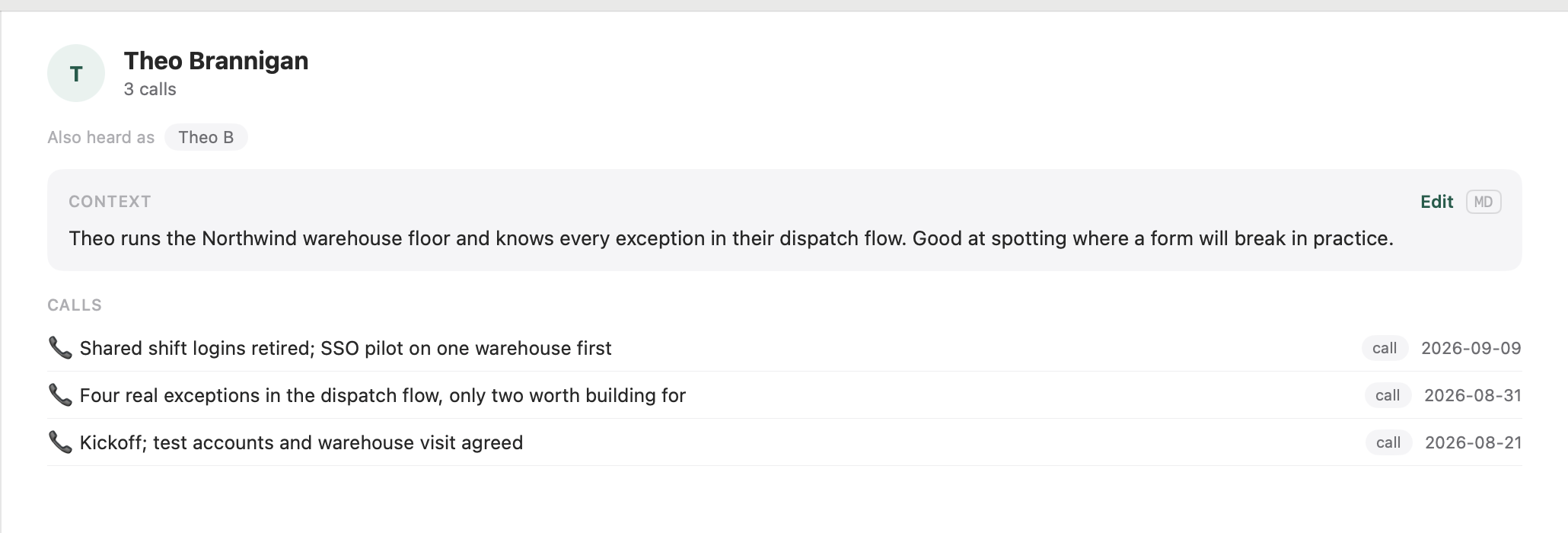
Every person gets a page. Every call adds a line to it.

Who is on it, what was said, when.

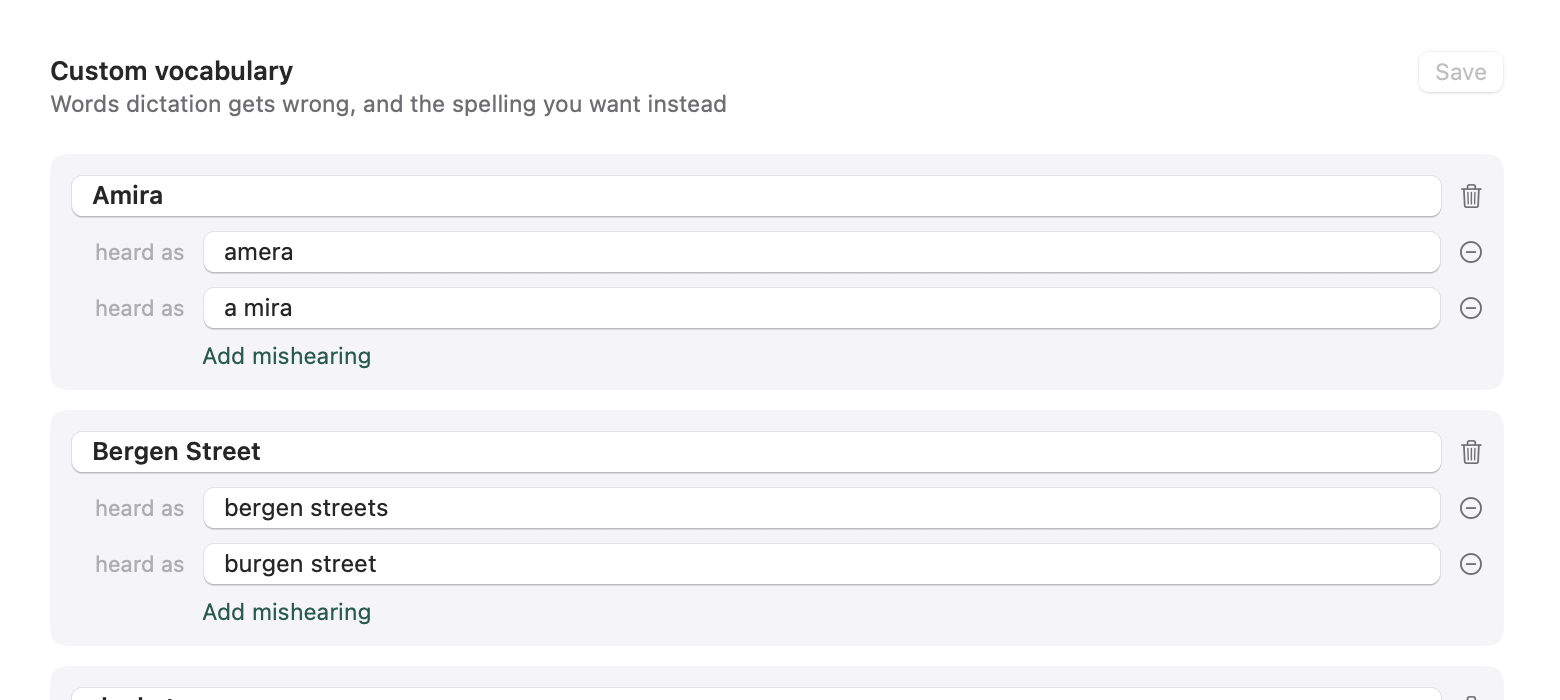
Names from your pages, plus the ones it keeps mishearing.

Local rule
What leaves your Mac
Every step runs on your Mac until you switch it. Here is what goes out when you do, and what goes out anyway.
| Step | By default | If you switch it on | What goes out |
|---|---|---|---|
| Dictation | On your Mac. | ElevenLabs Scribe, with your key. | The audio of that dictation. |
| Dictation cleanup | On your Mac. | OpenRouter (Claude Haiku), with your key. It also cleans call transcripts. | The transcript text. |
| Call recording | On your Mac. | No cloud option. | Nothing. |
| Call transcription | On your Mac. | ElevenLabs Scribe, with your key. | The audio of both channels, yours and theirs. If Scribe fails, your Mac does it. |
| Speaker separation | On your Mac. | With Scribe on, Scribe does it. | The same audio. Nothing extra. |
| Calendar hints | Off. Your calendar is not read. | Your Mac reads the event a call happens in, its title and who was invited, to spell names. | Nothing by itself. With a cloud write-up, the title and names go with the transcript. |
| Write-up | On your Mac. | OpenRouter (Claude), with your key. | The transcript (first 60,000 characters), your library index, the pages of matching projects, your name, any note you wrote to correct the call, and, with calendar hints on, the event's title and invitee names. |
| Your notes | Plain files in your folder. The app has no upload. | Only what the write-up row lists. | Nothing else. |
| Model downloads | Speech models from Hugging Face on first use. The write-up model from Ollama's library at launch, if missing. | The same. | A request for the model files. No audio, no text. |
| Updates | Nothing. Automatic checks are off. | Check for Updates asks diktator-app.vercel.app. | A request for the feed file. No system profile. |
| Licensing | Nothing. | Activate in Settings asks Lemon Squeezy. | Your license key and this Mac's name. |
The switches are in Settings, AI and Privacy. A cloud step needs a key of your own, kept in the Keychain. Then the provider's terms apply to what you sent.
It asks for the microphone, system audio and Accessibility for the dictation key, and for your calendar only if you turn on calendar hints. It touches that one folder, nothing else.
Beta
All of it, free during the beta. Ten calls filed; write to me for more.
Paid plans come later, after real people have used it.
Download for MacQuestions
Recording law varies by place; often everyone on the call must know. Tell them. The recording stays on your Mac unless you switch a cloud step on.
Apple silicon, macOS 14.2 or later. Nothing to install. The local model downloads itself the first time you open the app: a few GB, one time.
English and Polish daily. Most others work, detected per speaker.
Dictation later. Call capture never: iOS hides call audio from apps.